Trusted by 140+ Homeowners
Ceiling Water Damage Repair in Smithfield, VA
- Over 144 5-Star Reviews
- Free Estimates and Quotes
- 100% Satisfaction Guaranteed
- Child, Family & Pet Safe Steps
- 24-Hour Emergency Service
- Fully Licensed & Insured

Hidden Dangers Lurking Between Your Ceiling
Did you know that water damage from ceiling leaks can cost homeowners up to 50% more to repair than other types of water damage, with average claims ranging from $3,000 to $10,000? In Smithfield, VA, water damage repair costs can be even higher due to local labor rates and insurance company requirements. When water seeps into your ceiling, it can cause structural damage that’s not always visible to the naked eye, leading to costly repairs down the line.
Local homeowners trust our team for Ceiling Water Damage Repair because of our exceptional customer service and commitment to fast, reliable solutions. With over 165 five-star reviews, you can rest assured that you’re in good hands. Our team has the expertise and latest equipment to get the job done right the first time.
- Fast, reliable service with 24/7 emergency response
- Expertise in navigating insurance claims and documentation
- State-of-the-art equipment for efficient water removal and drying
How Our Ceiling Water Damage Repair Process Works
Our team follows a meticulous process to ensure your ceiling water damage is handled with care and precision. We understand the importance of proper documentation and insurance claims, which is why we work closely with you and your insurance company to ensure a smooth process from start to finish. When corners are cut, it can lead to costly rework and even safety hazards. Our goal is to get your home back to normal as quickly as possible.
Step 1: Assessment and Inspection
Our trained technicians will arrive at your property, assess the damage, and provide a detailed report of the work needed. This includes identifying hidden water sources and recommending the best course of action for repair. This step typically takes 30 minutes to 1 hour.
Step 2: Water Removal
We will begin by extracting as much water as possible from the affected area using our industrial-grade pumps and wet/dry vacuums. This step is crucial in preventing further damage and reducing the risk of mold growth. Water removal typically takes 1-3 hours depending on the severity of the damage.
Step 3: Drying and Dehumidification
Next, we will use specialized equipment to dry and dehumidify the affected area, including walls, ceilings, and floors. This step is critical in preventing further damage and ensuring a safe, healthy environment. Drying and dehumidification typically take 2-5 days depending on the extent of the damage.
Step 4: Repair and Restoration
Once the area is dry, our team will begin the repair and restoration process, which includes painting, drywall repair and any necessary structural repairs. We will work closely with you to ensure that the repairs meet your expectations and fit your budget.
Step 5: Final Inspection and Touch-ups
Before we consider the job complete, our team will conduct a final inspection to ensure that the repairs meet our high standards. We will also address any touch-up work needed to ensure a seamless finish.
Don’t wait, call us today to schedule your Ceiling Water Damage Repair service. Our team is here to help you through this challenging time and get your home back to normal as quickly as possible.
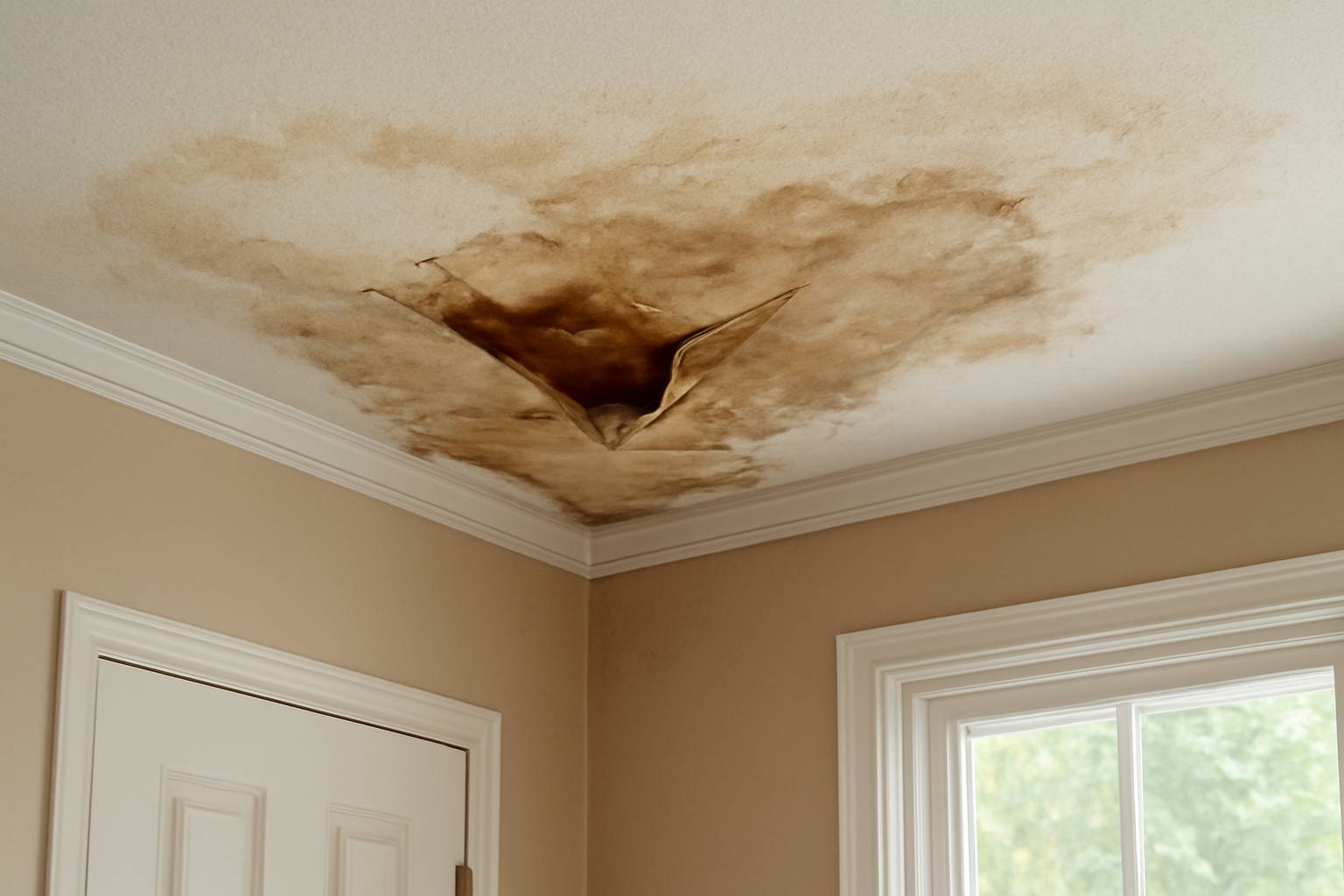
Warning Signs You Need Ceiling Water Damage Repair
Your ceiling may be hiding more than just dust and cobwebs. Water damage can be a silent enemy, causing costly repairs and even safety hazards. Here are some warning signs you need to watch out for:
Musty Odors That Won’t Go Away
A constant musty smell in your home or office could be a sign of hidden water damage. Don’t ignore it, water can seep into your walls and ceilings, causing mold growth and structural damage.
Water Stains on Your Ceiling
Water stains on your ceiling can be a sign of a leaky roof or pipe. Don’t assume it’s just a minor issue, water damage can escalate quickly, leading to costly repairs.
Warped or Sagging Ceilings
A warped or sagging ceiling can be a sign of water damage or structural issues. Don’t delay, water can seep into your walls and ceilings, causing safety hazards and costly repairs.
Peeling Paint or Wallpaper
Peeling paint or wallpaper can be a sign of water damage or high humidity. Don’t ignore it, water can seep into your walls and ceilings, causing mold growth and structural damage.
Water Droplets on Your Walls or Ceiling
Water droplets on your walls or ceiling can be a sign of leaky pipes or a roof leak. Don’t delay, water can seep into your walls and ceilings, causing costly repairs and safety hazards.
Spongy or Soft Spots on Your Ceiling
Spongy or soft spots on your ceiling can be a sign of water damage or structural issues. Don’t ignore it, water can seep into your walls and ceilings, causing safety hazards and costly repairs.
Ceiling Water Damage Repair vs. DIY: When To Call a Professional
| Situation | DIY? | Call a Pro? | Why |
|---|---|---|---|
| Small water leak (less than 1 gallon) | Yes | No | DIY is fine for small water leaks, but be sure to act quickly to prevent further damage. |
| Visible water damage (mold, warping, etc.) | No | Yes | Visible water damage needs professional attention to prevent further damage and safety hazards. |
| Hidden water damage (musty odors, water stains, etc.) | No | Yes | Hidden water damage needs professional attention to prevent further damage and safety hazards. |
| Water damage in a large area (more than 1,000 square feet) | No | Yes | Water damage in a large area needs professional attention to prevent further damage and safety hazards. |
| Water damage in a high-traffic area (hallways, living rooms, etc.) | No | Yes | Water damage in high-traffic areas needs professional attention to prevent further damage and safety hazards. |
| Water damage with structural issues (warped floors, etc.) | No | Yes | Water damage with structural issues needs professional attention to prevent further damage and safety hazards. |
Don’t risk your safety and your wallet, call a professional for Ceiling Water Damage Repair. Our team has the expertise and equipment to get the job done right the first time, every time.
Ceiling Water Damage Repair Cost In Smithfield, VA
The cost of Ceiling Water Damage Repair in Smithfield, VA can vary depending on the severity of the damage, the size of the affected area, and local labor rates. Here are some estimated price ranges for common services:
| Service | Typical Price Range | What Affects Cost |
|---|---|---|
| Water removal (less than 1,000 square feet) | $500 – $2,500 | Size of affected area, severity of damage |
| Water removal (1,000-2,000 square feet) | $2,500 – $5,000 | Size of affected area, severity of damage |
| Water removal (more than 2,000 square feet) | $5,000 – $10,000 | Size of affected area, severity of damage |
| Drying and dehumidification (less than 1,000 square feet) | $1,000 – $3,000 | Size of affected area, severity of damage |
| Drying and dehumidification (1,000-2,000 square feet) | $3,000 – $6,000 | Size of affected area, severity of damage |
| Drying and dehumidification (more than 2,000 square feet) | $6,000 – $12,000 | Size of affected area, severity of damage |
Exact pricing will depend on an on-site assessment and may vary based on local conditions. We offer free estimates and are happy to discuss your specific needs and budget.
Service Areas Near Smithfield, VA
We serve the following nearby communities:
Franklin, VA, Suffolk, VA, Chesapeake, VA, Portsmouth, VA, Virginia Beach, VA, Elizabeth City, NC, Moyock, NC, Southern Shores, NC, Kitty Hawk, NC, Kill Devil Hills, NC, Nags Head, NC, Manteo, NC, Hatteras, NC, Rodanthe, NC, Buxton, NC, Avon, NC, Waves, NC, Duck, NC, Corolla, NC.
Common Questions About Ceiling Water Damage Repair
Q: How long does it take to repair water damage?
A: The time it takes to repair water damage depends on the severity of the damage, the size of the affected area, and the complexity of the repairs. In general, water removal and drying can take 2-5 days while repair and restoration can take 1-3 weeks.
Q: Can I do Ceiling Water Damage Repair myself?
A: While it’s possible to do some repairs yourself, it’s not recommended to try to repair water damage without professional help. Water damage can be a sign of a larger issue, and trying to repair it yourself can lead to further damage and safety hazards.
Q: Will my insurance cover Ceiling Water Damage Repair?
A: Yes, most insurance policies cover water damage repair. But, the specifics of your policy will find out what is covered and what is not. Our team will work closely with you and your insurance company to ensure that your claim is processed smoothly and efficiently.
Q: How do I prevent water damage in the future?
A: To prevent water damage, it’s essential to maintain your home’s water systems, including pipes, fixtures, and appliances. Regular inspections and maintenance can help identify potential issues before they become major problems.
Q: What equipment do you use for Ceiling Water Damage Repair?
A: We use state-of-the-art equipment, including industrial-grade pumps, wet/dry vacuums, and dehumidifiers, to ensure efficient and effective water removal and drying. Our equipment is designed to meet the unique needs of each job, and we will work closely with you to find out the best course of action.
Check Our Other Relevant Services

Lonnie Traynor is a seasoned authority in the property recovery sector, bringing over 20 years of hands-on experience to every restoration project. As a licensed Damage Restoration Expert, Lonnie has built a reputation for technical excellence and unwavering integrity, ensuring homeowners regain peace of mind after a crisis.
𝗟𝗶𝗰𝗲𝗻𝘀𝗶𝗻𝗴 & 𝗘𝘅𝗽𝗲𝗿𝘁𝗶𝘀𝗲: Lonnie holds elite IICRC certifications in Water Damage Restoration (WRT), Applied Microbial Remediation (AMR), Applied Structural Drying (ASD), Odor Control (OCT), and Fire and Smoke Restoration (SRT). This comprehensive background allows him to navigate complex insurance claims and structural recovery with surgical precision.
𝗙𝗮𝘃𝗼𝗿𝗶𝘁𝗲 𝗣𝗮𝘀𝘁𝗶𝗺𝗲: When he isn’t on a job site, Lonnie enjoys restoring vintage woodworking tools and hiking through local nature trails.
𝗕𝗲𝘀𝘁 𝗣𝗮𝗿𝘁 𝗼𝗳 𝘁𝗵𝗲 𝗝𝗼𝗯: Lonnie finds the greatest reward in seeing a family’s relief when their house finally feels like a home again.